
Tristan Ishtar
VP of Sales
There’s a moment in almost every outdoor build when the material choice stops being theoretical. The design looks great on paper, the structure makes sense, and then someone asks the question that actually matters: What’s this going to look like—and hold up like—in five years?
That’s where the bamboo vs eucalyptus decision gets real. Both materials deliver a natural, organic aesthetic. Both are widely used in resorts, theme parks, restaurants, and backyard builds. But outdoors, they behave very differently. Understanding those differences upfront can save you from premature repairs, unexpected maintenance, or a structure that simply doesn’t age the way you planned.
Outdoor Durability & Weather Resistance
Outdoor construction is unforgiving. Sun, rain, humidity, and ground moisture will expose the weaknesses of any material over time. When comparing bamboo poles and eucalyptus poles, durability is often the deciding factor.
- Natural bamboo
- Highly sensitive to moisture and prolonged exposure to the elements
- Can deteriorate quickly if installed in ground contact or wet environments
- Performance varies widely by climate, lasting longer in dry regions and failing faster in humid or rainy areas
- Requires elevation off the ground and regular sealing to extend lifespan
- Artificial bamboo
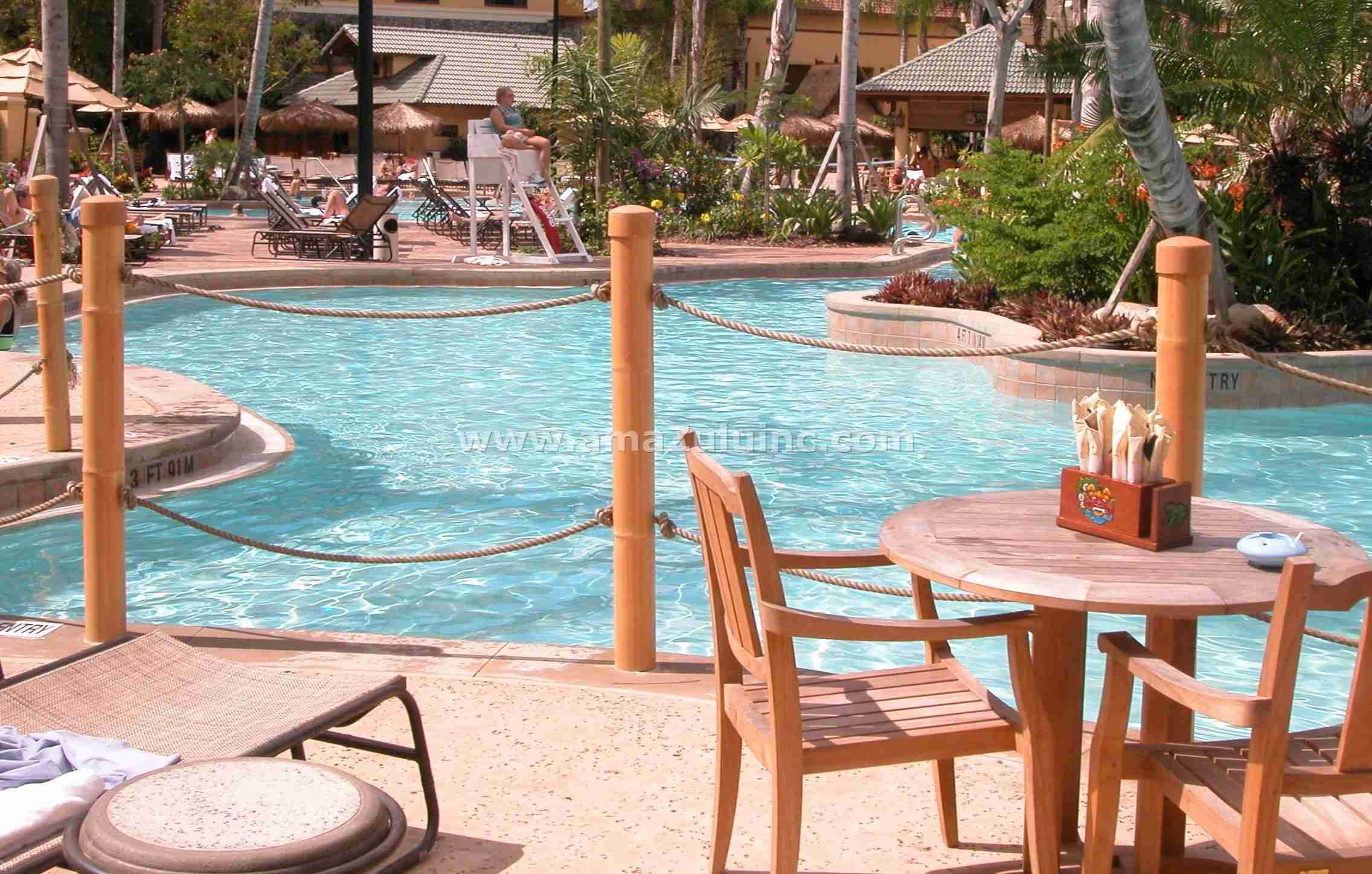
- Designed to handle outdoor exposure without rot or decay
- UV-stable and suitable for wet environments, including water features
- Requires little to no maintenance once installed
- Higher upfront cost compared to natural bamboo
- Cannot be used in structural applications
- Eucalyptus
- Naturally durable and well-suited for outdoor use
- Can be installed directly in the ground when properly treated
- Performs consistently across a wide range of climates
- Holds up well in high-traffic commercial environments
Structural Strength & Load-Bearing Applications
Not every pole that looks structural actually is. When outdoor projects involve pergolas, shade structures, fencing, or vertical supports, understanding how each material behaves under load is essential.
Bamboo Poles for Structural Use
Bamboo can be structurally strong, but only when the correct species is used. Certain bamboo varieties are dense and capable of handling load-bearing applications, while others are strictly decorative. The challenge is that bamboo’s performance depends heavily on species selection, treatment, and installation method. Outdoors, even strong bamboo can be compromised by moisture if it isn’t protected or maintained properly. This makes bamboo better suited for covered structures, decorative framing, or applications where visual impact matters more than long-term structural reliability.
Eucalyptus Poles for Structural Use
Eucalyptus behaves more like traditional construction timber. It offers consistent strength, minimal taper, and predictable performance across different installations. Builders can work with standard tools, and the poles maintain their integrity even in demanding outdoor conditions. Because eucalyptus can handle ground contact and moisture exposure when treated, it’s commonly used for pergolas, posts, shade structures, and other load-bearing elements where longevity is critical.
Appearance & Design Aesthetic
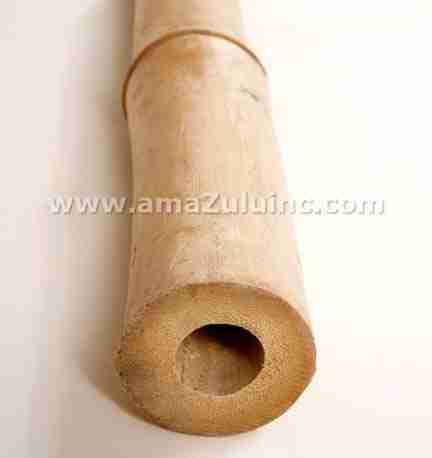
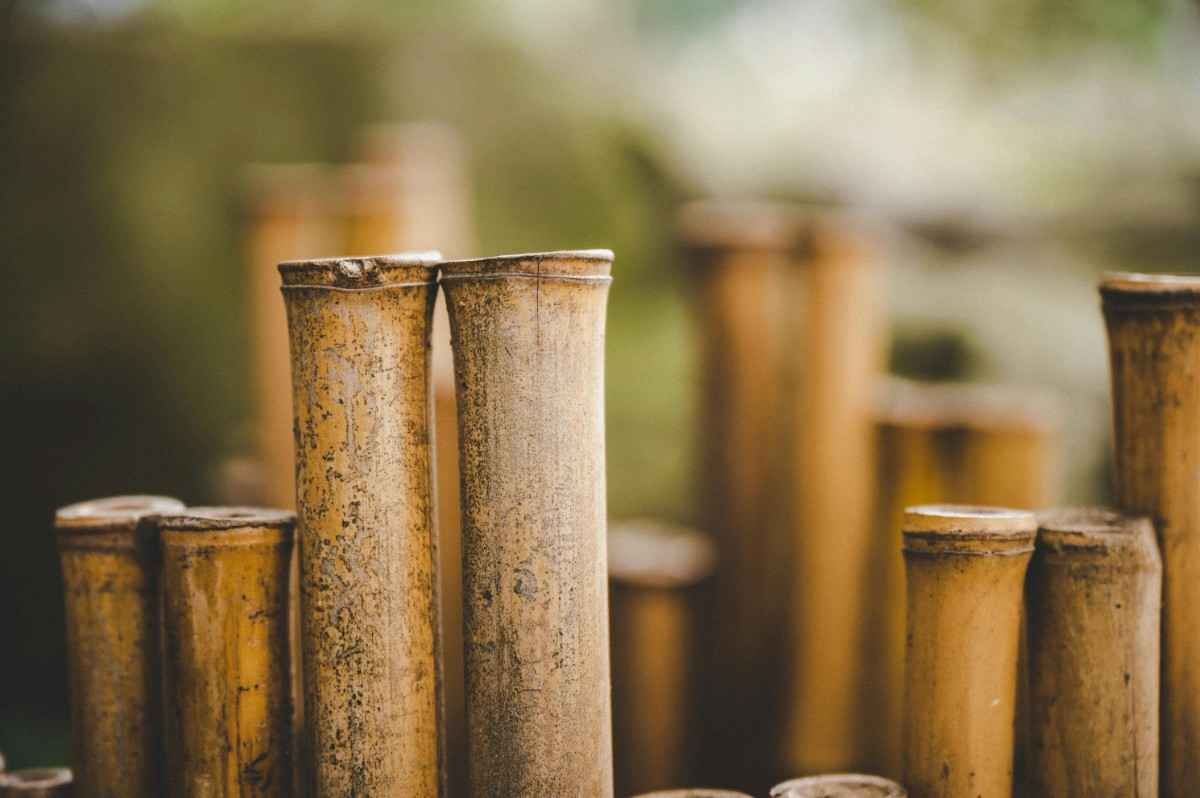
Bamboo delivers an unmistakable tropical look. Its visible nodes, organic texture, and natural variation instantly signal tiki, resort, or themed environments. When the goal is to make the material part of the visual storytelling, bamboo stands out.
Eucalyptus offers a subtler aesthetic. The poles grow straighter, with gentle nodules and a more uniform profile. The look is natural without being overly rustic, which allows eucalyptus to work just as well in modern outdoor spaces as it does in tropical or nature-inspired designs.
Choosing between the two often comes down to intent. Bamboo draws attention to itself as a design feature. Eucalyptus supports the overall structure quietly, letting the architecture and surrounding elements take center stage.
Maintenance Requirements & Long-Term Cost
Upfront material cost is only part of the equation. Outdoor projects succeed or fail based on how much maintenance they require over time and how often components need to be replaced.
- Bamboo
- Lower upfront cost for natural poles
- Requires periodic sealing and careful installation to avoid moisture damage
- May need replacement sooner in wet or humid climates
- Artificial options reduce maintenance but increase initial investment
- Eucalyptus
- Moderate upfront cost
- Minimal ongoing maintenance once installed
- Long service life reduces replacement and labor costs
- Often more cost-effective over the lifespan of the structure
Ideal Use Cases: When to Choose Each Material
Both bamboo and eucalyptus have a place in outdoor construction. The key is matching the material to the job, the environment, and the expectations for longevity.
When Bamboo Poles Make Sense
- Decorative or non-load-bearing elements
- Covered outdoor spaces
- Projects where visual texture and tropical character are the priority
- Artificial bamboo applications in wet or code-restricted environments
When Eucalyptus Poles Are the Better Choice
- Outdoor structural elements
- In-ground posts and pergolas
- High-traffic commercial environments
- Long-term installations where durability outweighs aesthetics alone
Climate & Environmental Considerations
Climate plays a major role in how bamboo performs outdoors. In dry regions, natural bamboo can last for years with proper care. In humid, rainy, or snowy environments, moisture accelerates splitting, rot, and decay, significantly shortening its lifespan.
Eucalyptus is far less sensitive to climate variation. Properly treated poles maintain strength and appearance across wet, dry, and coastal environments. This makes eucalyptus a safer choice when projects span different regions or face unpredictable weather conditions.
Ultimately, geography should influence material selection just as much as design goals. A material that performs well in one climate may fail quickly in another, which is why outdoor builds benefit from choosing materials with consistent, climate-resistant performance.
Talk to an Expert About Your Outdoor Build
Choosing between bamboo poles and eucalyptus poles is ultimately about more than materials—it’s about making the right long-term decision for your space, your climate, and how the structure will be used. Whether you’re planning a large-scale commercial project or refining a backyard build, having the right guidance early on can prevent costly mistakes and ensure the finished result performs as beautifully as it looks.
amaZulu, Inc. helps bring those decisions into focus. With more than 22 years of experience supplying tropical building materials worldwide, amaZulu offers both natural and synthetic options—along with the expertise to recommend what truly works for your specific application. From global sourcing and sustainable materials to fast, accurate project estimates and trusted contractor services, their team is equipped to turn creative concepts into durable, authentic outdoor environments. Reach out to amaZulu to talk through your project and get expert insight on the best materials to bring your vision to life.
Tristan Ishtar
VP of Sales
With over 11 years at amaZulu, Tristan brings deep expertise in tropical building materials and a customer-focused approach. He serves as a trusted consultant for architects and designers, providing expert guidance without high-pressure sales.