
Tristan Ishtar
VP of Sales
Eucalyptus poles have become a go-to material for themed commercial environments — theme parks, resorts, zoos, and hospitality venues — and for good reason. They are strong, visually distinctive, and built for long-term outdoor use. But even experienced designers and contractors make specification errors that create real problems down the line, from structural failures to budget blowouts to code violations. Here are the most common mistakes to avoid when speccing eucalyptus poles for commercial projects.
Mistake #1: Confusing Eucalyptus With Standard Dimensional Lumber
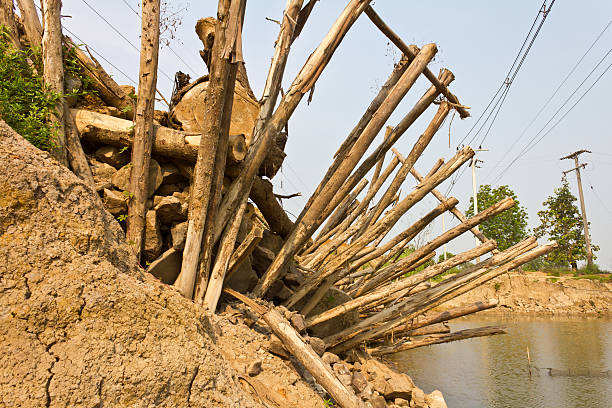
Eucalyptus poles are round, naturally tapered, and vary in diameter from pole to pole. Specifying them the way you would specify dimensional lumber — with assumptions about perfect uniformity in dimensions and fit — leads to installation headaches. As Tristan Ishtar, vice president of sales at amaZulu, puts it: “It’s an organic material. So unlike two-by-fours you see at Home Depot, every one of them is a little bit different.”
That said, eucalyptus does work with standard construction tools and hardware — no specialty drill bits or saw blades required. The mistake isn’t treating it as a natural material that requires some flexibility in the spec, it’s failing to communicate that flexibility to contractors who expect perfectly uniform components. Build tolerances into your specs and drawings, and brief your installation team on what to expect from a round, natural pole.
Mistake #2: Underspecifying Diameter for Structural Applications
Diameter is the most critical variable in eucalyptus pole performance, and it’s the one most often underspecified on commercial projects. Designers sometimes select a diameter based on visual proportion alone — what looks right in a rendering — without considering the actual load requirements of the application.
For primary structural posts in shade structures, pergolas, and tiki huts, larger diameters (4″ to 8″) are typically appropriate. Secondary framing and horizontal members can step down to mid-range diameters (2″ to 4″). Decorative and detail work can use smaller poles. amaZulu offers eucalyptus poles across a full range of diameters from 1″ to 8″ — but selecting the right one requires matching the spec to actual load calculations, not just aesthetics.
Mistake #3: Not Specifying Treatment Type
Specifying “eucalyptus poles” without specifying treatment type is one of the most consequential errors on commercial outdoor projects. There are meaningful differences between untreated poles, standard pressure-treated poles, and fire-retardant treated poles — and using the wrong one creates either a compliance problem or a significantly shortened material lifespan.
For any commercial outdoor application, pressure treatment should be the baseline spec. amaZulu’s EPA-certified, non-arsenic, non-erosive treatment gives poles a ground burial lifespan of 20-plus years and is the right starting point for all exterior use. For enclosed commercial venues — resort restaurants, covered theme park attractions, zoo pavilions — fire-retardant treatment is typically required by code. There are two options:
- Inherently fire-retardant poles — factory treated, with a 3 to 4 month lead time
- Locally applied Class A fire retardant — faster turnaround for tighter project timelines
Leaving treatment type out of the spec and assuming the supplier will default to the right option is a gamble that projects can’t afford to take. The amaZulu blog covers this in detail in their guide to eucalyptus poles in commercial construction.
Mistake #4: Ignoring Lead Times for Treated Poles
Inherently fire-retardant eucalyptus poles require a 3 to 4 month lead time. Custom diameters or lengths outside standard inventory add further time. Designers and project managers who treat eucalyptus poles as an off-the-shelf item — something that can be ordered a few weeks before installation — routinely run into schedule problems on commercial projects.
The fix is straightforward: lock in your specifications and place your order early. For fire-retardant treated poles specifically, that means getting the spec finalized and the order placed well before construction begins, not during it. The ARCHLOGBOOK guide on common construction stage mistakes makes the broader point well — late material decisions are one of the most avoidable sources of project delays.
Mistake #5: Specifying Tonkin Bamboo When Eucalyptus Is the Right Call
This one may seem like a different topic, but it comes up regularly. Designers sometimes spec cheaper, thinner natural materials for applications that genuinely require the structural performance of eucalyptus. According to Tristan Ishtar, this mismatch is one of the most common calls the amaZulu team receives: “A big part of our job is to tell them this will work, that won’t.”
Eucalyptus excels in applications where structural integrity, durability, and long-term outdoor performance are all required simultaneously — vertical posts, load-bearing beams, in-ground applications. For decorative non-structural elements like ceiling accents or interior wall features, lighter and less expensive materials may be perfectly appropriate. The mistake is applying the same material spec across an entire project without differentiating between structural and decorative roles. For a helpful comparison of how eucalyptus and bamboo stack up across different applications, see the amaZulu guide on eucalyptus vs bamboo for construction.
Mistake #6: Failing to Treat Cut and Drilled Surfaces
This is a field mistake that traces back to a gap in the specification. When eucalyptus poles are cut to length or drilled for fasteners on site, the freshly exposed wood surfaces are no longer protected by the pressure treatment. If the spec doesn’t explicitly call for immediate application of preservative to all cut and drilled surfaces, installation crews often skip that step — and the unprotected wood becomes a vulnerability point in what is otherwise a highly durable installation.
The fix is to include surface treatment requirements explicitly in your installation spec, not just in a verbal briefing. A simple line item — “apply approved wood preservative to all cut ends and drilled surfaces immediately upon exposure” — closes the gap and protects the integrity of the material over the long term.
Mistake #7: Overlooking Fastener Specification
Specifying eucalyptus poles without specifying fastener type is a common oversight. Standard steel hardware will corrode in outdoor commercial environments, staining surrounding wood and weakening connections over time. The correct spec calls for hot-dipped galvanized fasteners for most exterior applications, and stainless steel for high-moisture environments like pool decks and waterparks.
Pre-drilling requirements also belong in the spec. Driving fasteners into eucalyptus without pilot holes risks splitting, especially near pole ends. A clear installation spec should call out pre-drilling, fastener material, and the minimum distance from pole ends for all connection points.
For help building a complete eucalyptus pole specification for your next commercial project, contact the amaZulu team. With over 22 years of experience supplying theme parks, resorts, and hospitality venues, they can review your specs and flag any issues before they become field problems.
Tristan Ishtar
VP of Sales
With over 11 years at amaZulu, Tristan brings deep expertise in tropical building materials and a customer-focused approach. He serves as a trusted consultant for architects and designers, providing expert guidance without high-pressure sales.