
Tristan Ishtar
VP of Sales
Eucalyptus poles are a top choice for themed resorts, theme parks, zoos, and outdoor commercial structures — but selecting the right poles is only half the job. How those poles connect to each other and to supporting structures determines how long an installation lasts and how well it holds up visually over time. Getting eucalyptus pole connections right from the start saves costly repairs down the road.
Why Eucalyptus Pole Connections Require Special Attention
Eucalyptus poles are round, organic, and naturally varied — which makes them fundamentally different from dimensional lumber. As Tristan Ishtar, vice president of sales at amaZulu, explains: “It’s an organic material. So unlike two-by-fours you see at Home Depot, every one of them is a little bit different.”
That variation is part of what makes eucalyptus so visually compelling in themed environments, but it also means connection points need to be planned with the material’s natural characteristics in mind — particularly wood movement.
Like all timber, eucalyptus expands and contracts with changes in humidity and temperature. In outdoor commercial installations, this seasonal movement is constant. Connections that don’t account for it can lead to:
- Stress fractures at joint points
- Loosened fasteners over time
- Structural compromise in load-bearing applications
Slight gaps at connection points, along with flexible joints that can accommodate natural movement, are essential design elements. The amaZulu blog covers this in detail in their guide on using eucalyptus poles in theme park and resort projects.
Fastener Selection: Choosing the Right Hardware
The good news is that eucalyptus poles do not require specialized fasteners. Standard construction hardware works well — one reason eucalyptus is so contractor-friendly compared to denser South American hardwoods. That said, fastener material matters enormously in outdoor applications.
For eucalyptus pole connections, the best options are:
- Hot-dipped galvanized fasteners — reliable performance for covered or drier-climate installations
- Stainless steel fasteners — the right call for waterpark, poolside, or high-humidity environments
Standard steel hardware will corrode over time, staining surrounding wood and weakening the connection. This Old House has a helpful overview of choosing the right fasteners for outdoor construction projects.
For structural applications — beam-to-post or horizontal-to-vertical joints — lag screws and through-bolts with large washers are the workhorses. Large washers distribute load more evenly across the rounded pole surface, preventing the localized compression that causes splitting at connection points.
Pre-Drilling: A Non-Negotiable Step
Pre-drilling is essential for every fastener connection in eucalyptus pole work. Driving screws or lag bolts without pilot holes creates splitting risk, especially near the ends of poles.
Key pre-drilling guidelines:
- Drill pilot holes at least 3 to 4 inches from the end of any pole
- Always treat freshly cut or drilled surfaces with preservative immediately
- Use a sharp bit at consistent speed to prevent surface cracking
amaZulu’s eucalyptus poles are pressure-treated with an EPA-certified, non-arsenic treatment — but that protection doesn’t extend to newly cut or drilled surfaces. Brushing preservative onto exposed wood at every connection point maintains that protection and extends the life of the installation.
Connection Types for Common Applications
Post-to-Beam Connections
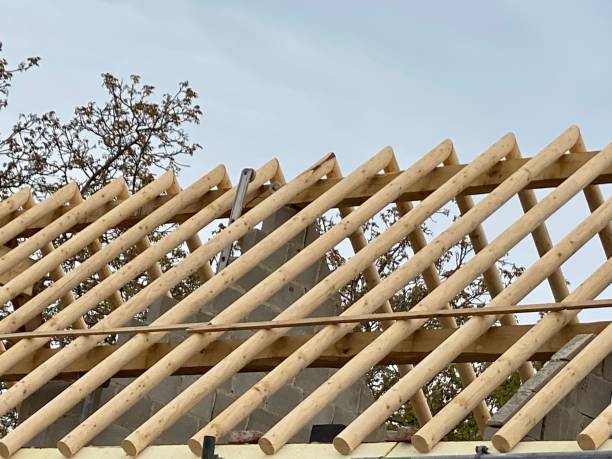
Post-to-beam connections are the most common structural connection type in commercial eucalyptus installations — found in shade structures, pergolas, and tiki huts. Because eucalyptus poles are round, standard post cap hardware often needs shimming to create a stable bearing surface.
Many contractors on larger commercial projects fabricate custom steel saddle brackets that cradle the round pole and bolt through it. This provides solid load transfer while keeping a clean visual appearance that suits themed environments.
Horizontal Rail Connections
For eucalyptus fencing, horizontal rails attach to round posts — meaning the fastener entry point sits on a curved surface. Drilling at a slight inward angle, rather than perfectly perpendicular to the post surface, helps the fastener seat more securely and reduces rail rotation under lateral load. This matters especially in resort and theme park fencing where guest contact is frequent.
Ground-Contact Post Installations
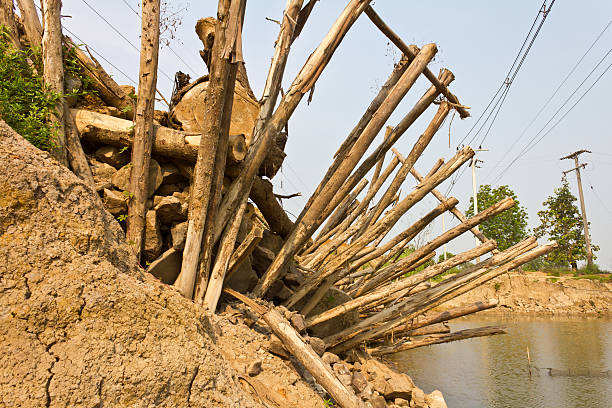
This is where eucalyptus genuinely excels. amaZulu’s pressure-treated eucalyptus poles can be buried directly in the ground without concrete footings, providing a ground burial lifespan of 20-plus years. Best practices for ground installation include:
- Use temporary bracing while backfilling to keep posts plumb
- Compact soil in 6-inch lifts for maximum stability
- Get alignment right the first time — below-grade connections are permanent
Accounting for Wood Movement in Long Spans
For long horizontal spans — extended pergola rafters or large cabana roof beams — rigid fixed connections at both ends will fight the wood’s natural movement. A better approach is:
- Fixed connection at one end
- Slotted or slightly oversized connection at the other end
- This allows the beam to move without building stress at the joint
Where eucalyptus meets metal hardware, neoprene gaskets or spacers between the two surfaces help isolate them. Metal and wood move at different rates with temperature changes, and without that buffer, tight connections can cause localized surface damage to the pole over time.
Maintaining Connections Over Time
Well-designed connections still benefit from periodic inspection, particularly in high-traffic commercial environments. Resort and theme park structures face weather exposure, heavy use, and frequent cleaning — all of which accelerate wear at joints. Checking fastener tightness seasonally, especially after the first winter, and treating any newly exposed wood surfaces promptly will keep connections performing the way they were designed to.
Eucalyptus poles are built for longevity, and thoughtful connection design is what allows that longevity to be realized in practice. For project-specific guidance on materials and connection details, contact the amaZulu team — they can walk you through the right approach for your specific application.
Tristan Ishtar
VP of Sales
With over 11 years at amaZulu, Tristan brings deep expertise in tropical building materials and a customer-focused approach. He serves as a trusted consultant for architects and designers, providing expert guidance without high-pressure sales.