

Tristan Ishtar
VP of Sales
Outdoor bamboo poles can create powerful architectural experiences—warmth, texture, shadow play, and an unmistakable sense of place. In public and commercial settings, though, bamboo can’t be treated like a mood-board material. It has to perform. Design teams typically succeed with bamboo outdoors when they evaluate every decision through three lenses at once: code acceptance, safety performance, and weather durability. Miss any one, and you risk permitting delays, premature degradation, or expensive rework after opening day.
First, a structural reality check: synthetic bamboo is not for load-bearing work
You can’t use artificial (synthetic) bamboo for structural support. It may be excellent as a durable, consistent-looking finish material—especially outdoors—but it is not a structural member and should not be specified as one.
If the bamboo element will carry load, resist significant wind forces as a primary member, or function as a true frame, you’re in natural, structural-grade bamboo territory. The types most commonly used when strength matters include:
- Guadua (often selected for heavy-duty structural applications)
- Solid bamboo / engineered bamboo members designed for structural use
- Tre-Gai (used in structural contexts where appropriate)
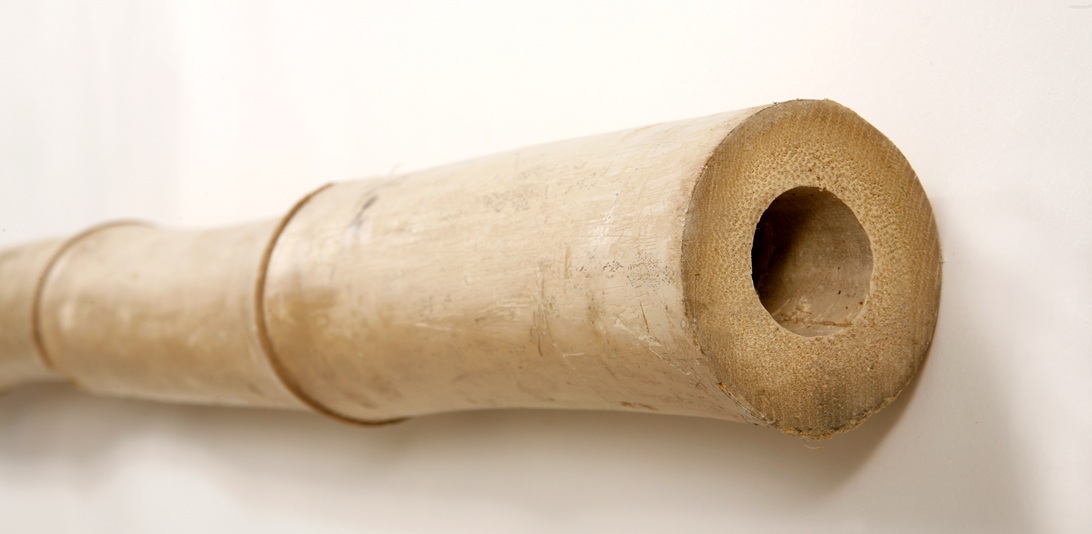
By contrast, common decorative poles can be perfect for cladding and theming, but they’re not the right choice when you need structural performance. For a deeper look at how these bamboo pole types compare for structural vs. decorative roles, reviewing the differences between Tre-Gai, solid bamboo, Guadua, and Tonkin is a useful first step before finalizing your spec.
Code first: define the bamboo’s role before you define the bamboo
Before sizing, spacing, or detailing, get very clear about what the bamboo is supposed to be in the project. Is it:
- Non-structural decorative cladding
- Screen/fence element
- Guard-adjacent feature
- Part of a shade element or structure
That definition drives everything downstream: how reviewers interpret it, what documentation you’ll need, and what the contractor will assume it can do.
A common misstep is assuming that “decorative” equals “no code scrutiny.” In assembly occupancies and high-traffic public environments, decorative elements still affect egress paths, combustibility concerns, and public safety perception—so they often get looked at more closely than teams expect.
Coordinate with the authorities early—because permits don’t accept vibes
Outdoor bamboo projects go smoother when you treat the code conversation like a critical-path milestone, not an end-of-design formality. The goal is to get alignment early on what the bamboo is considered to be, and what proof is required to approve it.
Bring to that conversation what reviewers actually evaluate: product-specific documentation tied to the intended system—not generic claims about bamboo as a material.
Bring to the meeting: product data tied to the exact use case, any relevant fire-performance documents if applicable, and notes on how the element will be installed and maintained. For projects where fire documentation is part of the approval path, the process of building a compliant fire documentation package is worth reviewing early in design development.
Then walk through the key topics:
- Fire-performance pathway for the use case
- Height, egress, and proximity considerations
- Wind exposure and attachment expectations
- Inspection and maintenance obligations where relevant
When documentation matches the installed condition, approvals tend to be cleaner. When the submittal is vague, teams get stuck in loops.
Safety limits: the fastest way to get into trouble is letting “decor” behave like structure
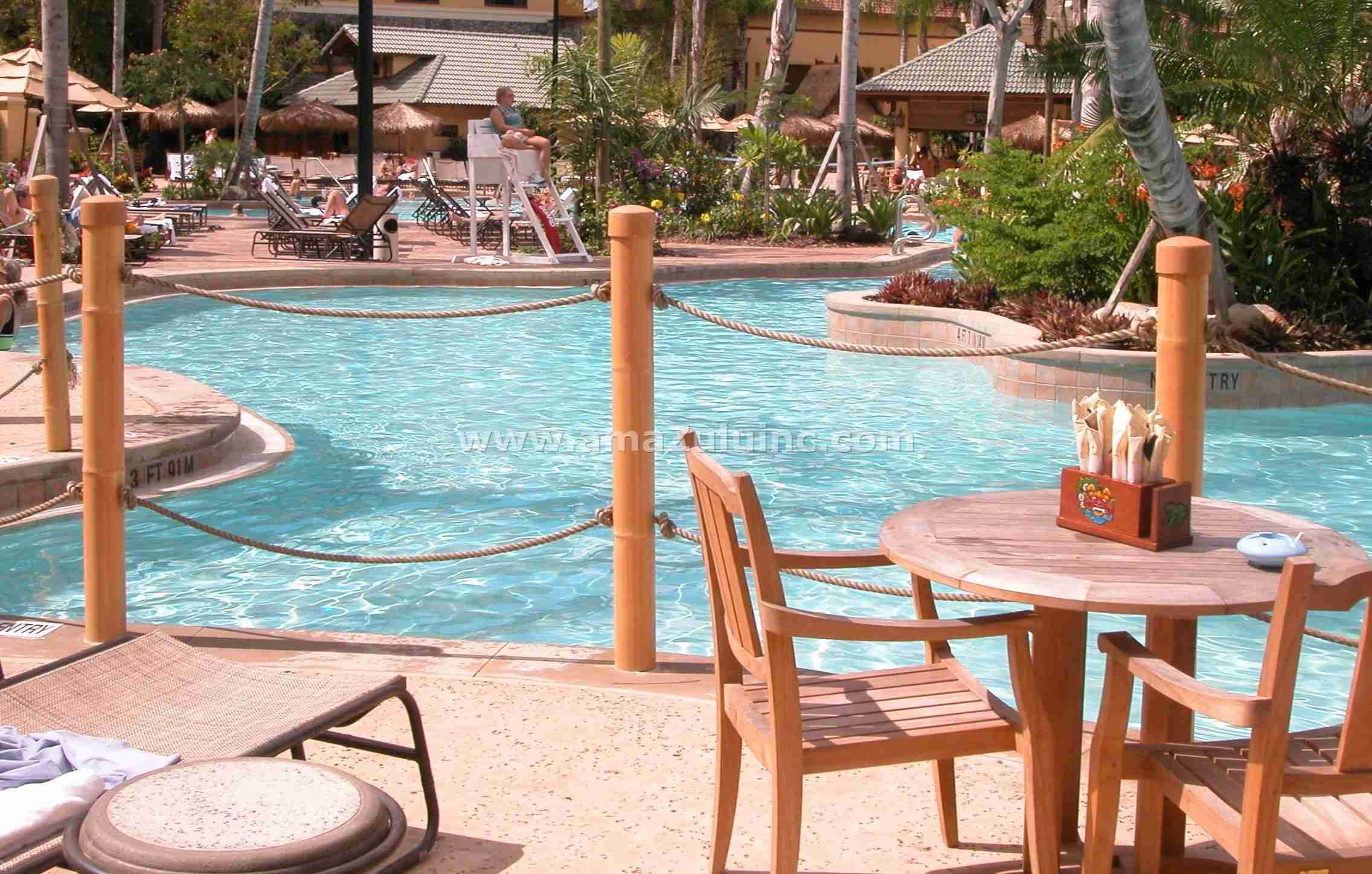
Picture a resort walkway with bamboo poles acting as a screen near a queue. It’s decorative—until guests lean on it while waiting. Or kids climb it. Or someone grabs it to steady themselves at a stair edge. The design intent might be “visual only,” but the public will test it like it’s load-bearing.
That’s where safety planning has to be blunt and specific.
Define loads (or explicitly prohibit them)
If poles are not load-bearing, treat that as a design requirement, not a hope. Drawings and specs should make the intended limits clear—because ambiguity is how decorative elements inherit structural expectations in the field.
Design for misuse, not ideal behavior
Assume leaning, grabbing, bumping, and occasional climbing. If a failure could create injury risk, design defensively: robust connections, conservative spacing, and details that don’t turn a single point of failure into a cascading problem. Structural engineers use redundancy for exactly this reason—if one component is tested beyond its intent, others can absorb the load and prevent a cascading failure.
Overhead elements need a “fail safely” mindset
When bamboo is above people—shade elements, canopies, overhead accents—your detailing should prioritize containment and redundancy. If something loosens, it should not become a falling hazard.
In short: if there’s any chance users may treat the element as structural, build it like they will.
Weather exposure is the durability driver—so map it like you would any exterior system
Exterior bamboo performance is highly condition-dependent. The biggest mistake teams make is specifying one finish and one approach across the entire project when exposure conditions vary dramatically.
Start by mapping the exposure realities: UV intensity and orientation; rain and wet-dry cycling; humidity and biological growth potential; coastal salt exposure; freeze-thaw conditions (where applicable).
Once you map it, you can spec it. Zone-based specifications almost always outperform a single “universal” finish approach. South and west exposures and splash zones typically need the most robust coating system and the most honest maintenance plan—because they’re where good-looking bamboo goes to die first. Research on bamboo-guadua structures confirms that keeping bamboo dry, allowing ventilation, and avoiding perforations that allow moisture entry are among the most effective measures for extending service life in outdoor conditions.
Detail for drainage, drying, and inspection access
If durability is the goal, detailing is the battleground. Strong outdoor bamboo systems tend to share the same principles:
- Water does not sit at bases, joints, or end grain
- Connections allow drying and airflow instead of trapping moisture
- Dissimilar materials are isolated where corrosion is possible
- Wear points are accessible for inspection and touch-up
Here’s the hard truth: if your details trap moisture, no coating system will fully compensate. For bamboo installations in rainy or high-humidity climates, drainage detailing and regular resealing are the two factors that most consistently separate long-lasting projects from early failures.
Installation controls that protect performance
Outdoor bamboo lives or dies in the field. You can have a strong design on paper, and still end up with early failure if handling, cutting, and sealing aren’t controlled.
Use a contractor-facing checklist that’s hard to misinterpret:
- Proper storage and handling before installation
- Sealing of all cuts and penetrations
- Verified compatibility of fasteners/adhesives/coatings
- Mockup approval for both aesthetics and technical detailing
- Punch-list review focused on exposed end cuts and finish damage
Most early failures begin in predictable places: cut edges, fastener points, and unsealed modifications. Knowing how to cut bamboo poles correctly—including sealing protocols at cut ends—is one of the most practical ways to prevent those predictable failures from becoming unavoidable ones.
Maintenance expectations: make it easy for owners to do the right thing
Owners don’t want a lecture—they want clarity. A simple Q&A format in handover documents can prevent a lot of confusion (and neglect).
How often should we inspect it? Plan for a routine inspection cadence—often semiannual—plus additional checks after severe storms or unusual events.
What triggers recoating? Define practical triggers (not just time): fading, loss of water beading, surface checking, or visible coating breakdown. Interval ranges should vary by exposure zone, not be one-size-fits-all.
What requires immediate repair? Call out the conditions that shouldn’t wait: deep splitting, loose attachments, compromised connections, or any damage in overhead applications.
Owner alignment on maintenance is what preserves both safety and appearance over the long run.
Bottom line
Bamboo poles for outdoor structures can absolutely succeed in demanding public projects—but only when teams treat them as engineered finish systems with defined limits. Code coordination prevents permitting surprises, conservative safety detailing prevents misuse from becoming liability, and weather-driven maintenance planning is what keeps the installation looking intentional years after it opens. Rule of thumb: if it’s outdoors and public-facing, treat bamboo like a system—not a surface.
Tristan Ishtar
VP of Sales
With over 11 years at amaZulu, Tristan brings deep expertise in tropical building materials and a customer-focused approach. He serves as a trusted consultant for architects and designers, providing expert guidance without high-pressure sales.