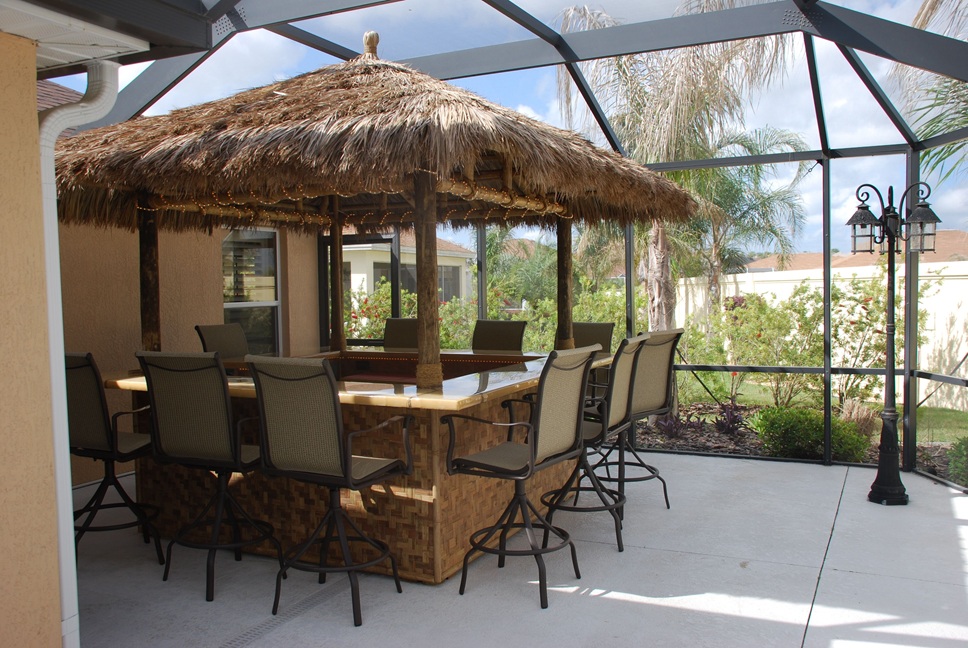
High-quality synthetic thatch typically lasts 20 years or more in coastal and high-UV climates, and many products carry warranties of 10 to 20 years to back that up. That longevity is exactly why resorts, theme parks, zoos, and restaurants in sunny, salt-air locations choose it over natural thatch, which can break down in as little as a few years — or even months — under the same conditions. Where natural palm or reed thatch dries out, fades, rots, and needs regular replacement, synthetic thatch is engineered to hold its appearance and keep performing.
The durability comes from the materials themselves. Most synthetic thatch is made from High-Density Polyethylene (HDPE) treated for UV resistance, color stability, and fire retardancy, so it doesn’t rot, attract pests, or degrade when it’s constantly exposed to moisture and sun. Premium products are put through extensive sun-exposure testing before they reach the market — one widely used synthetic palm thatch went through roughly 10,000 hours of it. Many products also carry documented wind ratings, with some tested to 110 MPH, which matters a great deal in hurricane-prone coastal regions.
The catch is that the exact lifespan depends on the specific product, the quality of the installation, and your local conditions, so a warranty is only part of the picture. Salt air, intense UV, and storm exposure are the toughest tests a roofing material faces, and matching the right grade of thatch to your environment is what ensures you actually get those decades of performance. For most coastal or high-UV projects, synthetic thatch is worth the higher upfront cost because the longer lifespan and near-zero maintenance make it more economical over time. If you’re not sure which product fits your climate and design goals, amaZulu can help you choose the right one.