
Tristan Ishtar
VP of Sales
When it comes to building shade structures for resorts, theme parks, zoos, or hospitality venues, material selection shapes everything — from how the structure performs in harsh weather to how it looks five years down the road. Eucalyptus poles have become a go-to choice for designers and contractors working on these projects, and for good reason. Before you finalize your specs, here’s what you need to know.
Why Eucalyptus Works So Well for Shade Structures
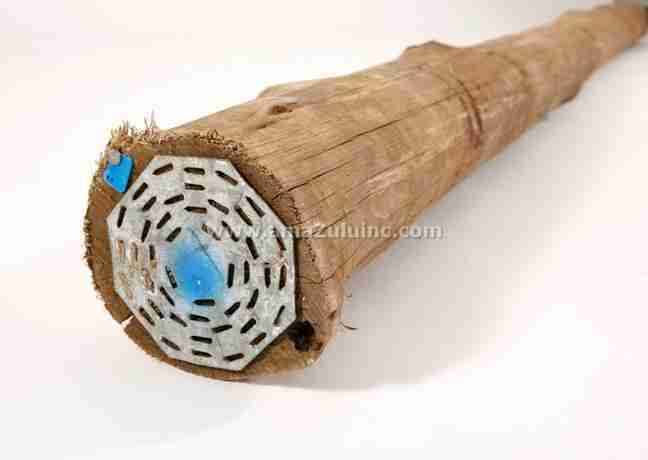
Eucalyptus poles bring a rare combination of structural strength and organic visual appeal to shade structure design. They are stronger than pine, harder than most North American construction woods, and — unlike many premium hardwoods — they work with standard tools and hardware. As Tristan Ishtar, vice president of sales at amaZulu, puts it: “It’s an organic material. So unlike two-by-fours you see at Home Depot, every one of them is a little bit different.”
That natural variation is actually an asset in themed commercial environments. No two poles look exactly alike, which gives pergolas, cabanas, and pool shade structures an authenticity that manufactured materials simply can’t replicate. For resorts and theme parks especially, that organic character is a design feature, not a flaw.
Eucalyptus is also one of the few timber species that gets stronger when wet, outperforming pressure-treated pine in high-moisture environments. That makes it particularly well-suited for poolside shade structures and waterpark applications where moisture exposure is constant.
Sizing: Getting Diameter and Length Right
Choosing the right diameter is more important than choosing the right length when speccing eucalyptus poles for shade structures. Larger diameter poles carry greater load and make a bolder visual statement — important for resort entrance structures or major shade pavilions. Smaller diameters work well for secondary framing, rafters, and decorative elements.
amaZulu offers eucalyptus poles in diameters from 1″ to 8″ and lengths from 8′ to 18′, giving designers a wide range to work with. Key sizing considerations for shade structures include:
- Primary vertical posts: Larger diameters (4″ to 8″) for structural integrity and visual weight
- Horizontal beams and rafters: Mid-range diameters (2″ to 4″) depending on span length
- Decorative and secondary framing: Smaller diameters (1″ to 2″) for detail work
For large commercial shade structures, it’s worth consulting with amaZulu’s team early in the design process. They can help match pole sizes to load requirements and flag any lead time considerations for custom dimensions.
Treatment and Durability: What the Specs Actually Mean
Not all eucalyptus poles are created equal. amaZulu’s poles are pressure-treated using an EPA-certified, non-arsenic, non-erosive process — a meaningful distinction for commercial projects where environmental compliance and human contact matter. This treatment gives the poles a ground burial lifespan of 20-plus years, which is significant for any shade structure with posts set directly in the ground.
For enclosed venues or projects with strict fire safety requirements, amaZulu also offers fire-retardant treated eucalyptus poles. There are two options:
- Inherently fire-retardant poles — factory treated, requires a 3 to 4 month lead time
- Locally applied Class A fire retardant — faster turnaround for time-sensitive projects
Building departments and fire marshals at theme parks and resorts routinely require fire-rated materials for public-facing structures. Knowing which option fits your project timeline is an important early spec decision. The amaZulu blog covers this in more detail in their guide to using eucalyptus poles in theme park and resort projects.
Structural Considerations for Common Shade Structure Types
Pergolas and Open-Frame Shade Structures
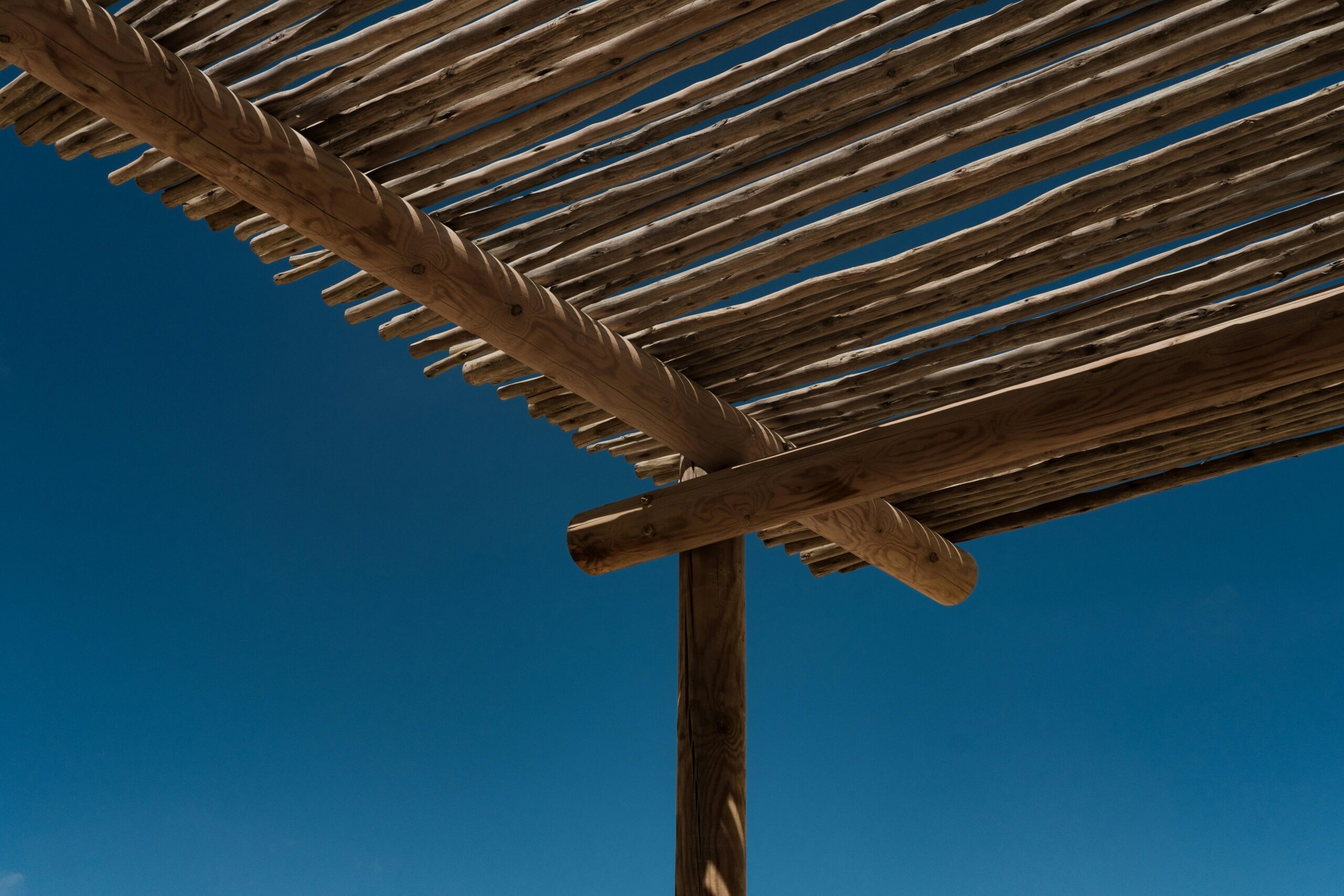
Eucalyptus poles are a natural fit for pergola construction. Their consistent taper and minimal variation in diameter make them easier to work with than many round-pole timber species. Posts can be set directly in the ground without concrete footings — a real cost and labor advantage on large commercial projects with multiple post locations.
For pergola rafters and cross-members, eucalyptus holds fasteners well and accepts standard construction hardware without special tools or drill bits. Pre-drilling is essential, but beyond that, contractors familiar with dimensional lumber will find eucalyptus straightforward to work with. The Structureworks blog has a useful overview of design considerations for commercial pergolas that pairs well with eucalyptus-specific planning.
Cabanas and Pool Shade Structures
Cabanas and poolside shade structures place heavy demands on building materials — constant moisture, UV exposure, and high guest contact are all factors. Eucalyptus handles all three well. Its natural density and pressure treatment make it highly resistant to moisture damage, while its hardness stands up to the wear and tear of high-traffic environments.
For the sides and decorative elements of poolside cabanas, eucalyptus pairs naturally with amaZulu’s range of thatch roofing products. A eucalyptus pole frame topped with synthetic thatch roofing creates a structure that is both visually authentic and built for long-term commercial use.
Zoo and Safari-Themed Shade Structures
Zoos and safari-themed environments are among the strongest use cases for eucalyptus poles in shade structure design. The material’s natural aesthetic fits seamlessly into African or tropical theming, and its non-toxic treatment makes it safe for animal enclosures and public contact areas alike. Many leading zoos specify eucalyptus specifically because no other material delivers the same combination of authentic appearance and structural reliability.
Installation Details Worth Noting Before You Spec
A few practical points that affect how eucalyptus poles perform in shade structure applications:
- Posts can be buried directly in the ground — no concrete footings required in most applications
- Always treat freshly cut or drilled surfaces with preservative immediately
- Use hot-dipped galvanized or stainless steel fasteners to prevent corrosion
- Allow for slight movement in long horizontal spans to account for natural wood expansion and contraction
- Check with local building departments early — commercial shade structures typically require permits and engineered drawings
For designers working on resort cabana or gazebo projects, amaZulu’s team can provide material specs, lead time estimates, and guidance on pairing eucalyptus poles with the right roofing and fencing products to complete the look.
A Material Worth Speccing Early
Eucalyptus poles reward early planning. Fire-retardant treatment options have lead times, custom dimensions require lead time discussions, and bulk orders benefit from early coordination to ensure consistent pole characteristics across a large project. Designers who bring eucalyptus into the spec process early get more options and better pricing than those who treat it as a last-minute material decision.
For a material that delivers structural performance, authentic tropical aesthetics, and long-term durability in one package, eucalyptus poles are hard to beat in shade structure applications. Contact the amaZulu team to discuss your project specs and get the right poles sourced for your next shade structure build.
Tristan Ishtar
VP of Sales
With over 11 years at amaZulu, Tristan brings deep expertise in tropical building materials and a customer-focused approach. He serves as a trusted consultant for architects and designers, providing expert guidance without high-pressure sales.