
Tristan Ishtar
VP of Sales
If you’re specifying bamboo poles in a commercial environment, the key question usually isn’t “Is bamboo code-compliant?”
It’s this:
Can this exact bamboo assembly meet the code pathway required for this project?
That distinction changes everything. Most jurisdictions don’t approve “materials” in the abstract. They approve tested performance, documented systems, and installation methods that match what was tested. So the goal isn’t to win an argument about bamboo—it’s to build a compliance trail that an Authorities Having Jurisdiction (AHJ) can actually accept.
Start here: a “bamboo poles fire rating” is almost never universal
Architects often ask for a single, universal bamboo poles fire rating. In practice, what you get is usually one of these:
- A tested finish or treatment applied to a specific bamboo product
- A tested assembly (substrate + adhesive/fasteners + bamboo + coating)
- A local code alternative accepted by the AHJ based on submitted documentation
So instead of asking a supplier, “Are your poles fire rated?” ask questions that force specificity.
The five questions that matter:
- What test standard was used?
- Which exact product SKU was tested?
- Was the test done on untreated poles, treated poles, or a full assembly?
- What installation conditions are required to maintain that performance?
- Are there limitations by location (interior, covered exterior, fully exposed exterior)?
If a supplier can’t answer those clearly, you don’t have a fire-rating story—you have marketing language.
Fire rating vs. fire-retardant treatment: these are not the same thing
These two phrases get mixed together constantly on commercial projects, and that’s where teams get burned (sometimes literally, usually schedule-wise).
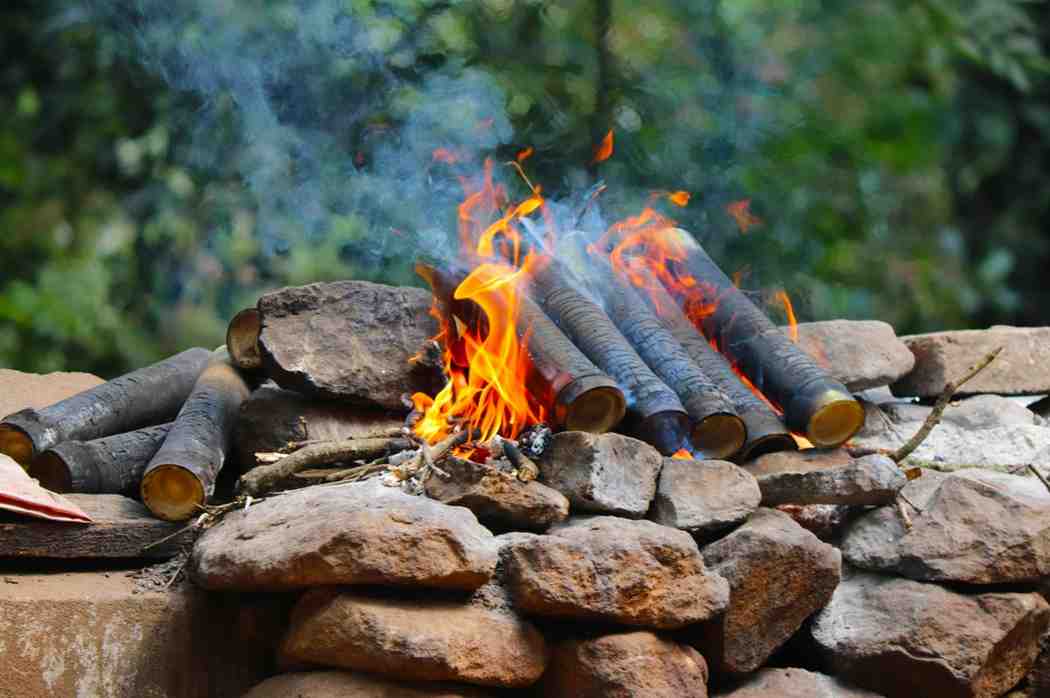
Fire rating generally refers to a tested result under a recognized standard. Fire-retardant treatment refers to a process or coating intended to improve reaction-to-fire behavior (like reducing flame spread). Boron-based compounds are among the most widely used treatments for bamboo in construction contexts, and while they can slow burning, the treatment alone is not proof of code compliance.
A treatment can help you reach a target result—but the treatment itself is not automatically proof of compliance.
Here’s the practical takeaway: If the design relies on a specific fire outcome, you need test documentation tied to the same product form and the same intended use condition. Interior assumptions don’t always transfer to exterior weathering. A coating that performs well in a controlled environment may not behave the same after UV exposure, humidity cycling, or field cuts.
When evaluating natural vs. synthetic options, it’s worth noting that synthetic bamboo poles are manufactured with built-in class A fire-retardant materials—an important distinction for projects where documented fire performance is a baseline requirement.
What commercial teams typically need (and why “one PDF” is rarely enough)
Most projects go smoother when the design team requests a documentation package early—during design development, not after bids are in.
Here’s what typically belongs in that package:
Fire performance and compliance
- Current fire test reports from recognized labs
- Clear identification of what was tested (product + coating + assembly)
- Any listed system information if available
Product and installation
- Product data sheets for the bamboo and any coatings/treatments
- Installation instructions used during testing (or the equivalent requirements)
- Details that affect compliance: substrate, fasteners/adhesives, clearances, configuration
Operations and long-term performance
- Maintenance and recoat requirements needed to preserve performance
- Warranty terms and exclusions relevant to exterior use or high-humidity conditions
- Safety data / emissions information if required by the specification
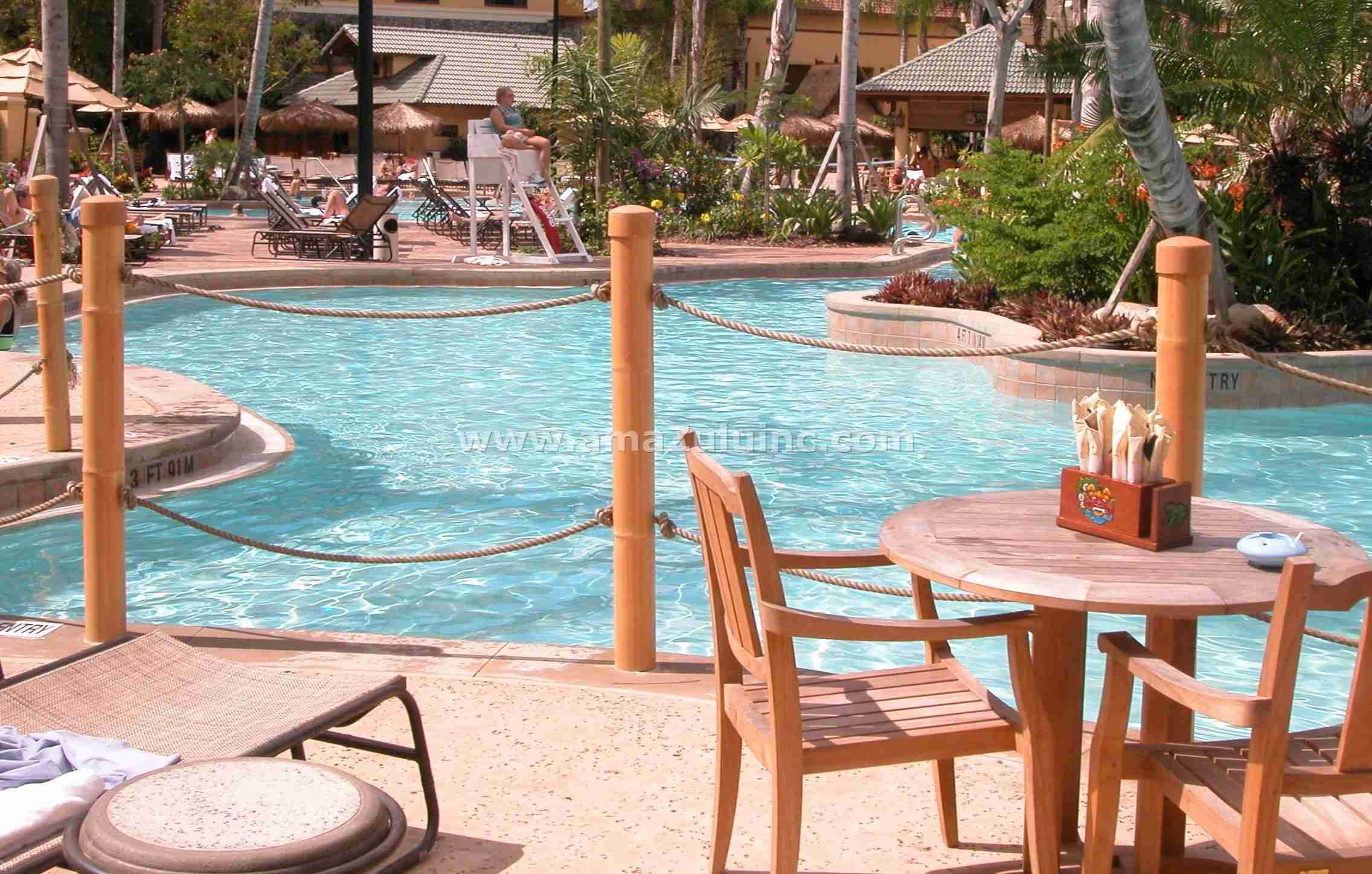
If the bamboo is going into a public-facing venue (resorts, water parks, zoos, themed restaurants), it’s also smart to request project references with similar occupancy and exposure conditions—not just pretty photos.
A supplier checklist you can drop into RFIs
Use this when you’re trying to avoid late redesign and submittal chaos:
- Which bamboo product type is proposed (solid pole, split pole, slat, panel, etc.)?
- Is fire performance documented for interior, exterior, or both?
- Are there limitations for covered exterior vs. fully exposed exterior locations?
- Does UV exposure, moisture cycling, or weathering affect treatment performance?
- Do field cuts, penetrations, or drilled connections require resealing?
- What quality-control steps are recommended at install and turnover?
This checklist does two things: it flushes out unknowns early, and it makes the eventual submittal package far easier to approve.
Compliance is a process, not a yes/no answer
For commercial work, the cleanest way to reduce risk is to follow a sequence. Not a complicated one—just a disciplined one:
1) Define the use case Decorative screen, cladding, overhead feature, shade element, guard-adjacent detail, etc.
2) Identify the code path Do this with the code consultant/spec writer early. Don’t wait for the contractor to interpret it. The AHJ must approve your construction documents before work begins—this includes reviewing architectural, structural, mechanical, and fire protection plans, so the earlier you engage, the better.
3) Submit product-specific documentation to the AHJ early Early feedback is cheaper than late changes.
4) Align details to tested conditions Substrates, adhesives, fasteners, clearances, attachment spacing—this is where “compliance on paper” often breaks in the real world. For large-scale installations, reviewing how bamboo poles are used in resort and theme park construction can provide useful context on how experienced teams handle these documentation requirements.
5) Document maintenance obligations at turnover If ongoing performance depends on recoating or inspection cadence, that belongs in O&M manuals and owner handoff documentation.
When teams follow that sequence, bamboo usually integrates with fewer surprises and clearer bid-phase scope.
The most common specification mistake
A frequent failure pattern looks like this: The spec demands a performance outcome (a target fire behavior) but doesn’t lock down the system details that make that outcome achievable—approved coating system, required film build, recoat intervals, permitted substrates, and installation conditions.
Result: the construction team is forced to “solve compliance” in submittals, and that often means schedule delays, value engineering, or redesign.
This challenge isn’t unique to bamboo. It applies to structural bamboo poles just as it does to timber or composite cladding systems—any material where performance is assembly-dependent requires that the spec define the full system, not just the finish material.
Put differently: if you don’t define the system, the system will get defined for you—by whoever is under the most pressure.
Bottom line
Bamboo can absolutely be part of code-regulated commercial projects. But success depends on verifiable testing, clear treatment scope, and disciplined documentation that matches how the product will actually be installed. If your design intent depends on a specific bamboo poles fire rating outcome, lock the exact assembly and the compliance documents before procurement. That’s the most reliable way to protect design quality, permitting timelines, and life-safety expectations.
Tristan Ishtar
VP of Sales
With over 11 years at amaZulu, Tristan brings deep expertise in tropical building materials and a customer-focused approach. He serves as a trusted consultant for architects and designers, providing expert guidance without high-pressure sales.